Augmented Reality (AR) has emerged as a transformative force in education, reshaping how students engage with learning materials. By integrating immersive experiences, AR enhances understanding and retention of complex concepts. However, the implementation of AR in classrooms presents a range of challenges that educators must navigate. As institutions explore its potential, the question arises: can AR truly redefine traditional educational paradigms, or will obstacles hinder its effectiveness?
The Benefits of Augmented Reality in the Classroom
As educators increasingly seek innovative ways to enhance student engagement, augmented reality (AR) emerges as a transformative tool within the classroom.
By creating interactive experiences, AR captivates students’ imaginations, fostering deeper understanding and retention of complex concepts.
This technology not only encourages active participation but also nurtures curiosity, ultimately leading to enhanced engagement and a more vibrant, dynamic learning environment that promotes exploration and discovery.
Practical Applications of AR in Education
Augmented reality offers a multitude of practical applications that extend beyond mere engagement, transforming traditional educational methodologies.
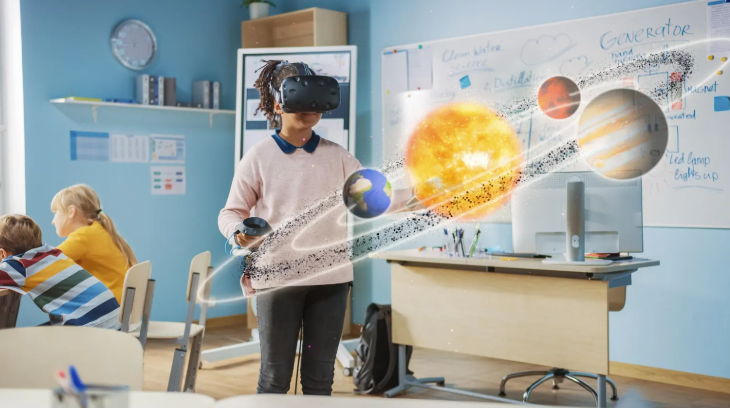
By creating interactive experiences, AR facilitates immersive learning that captivates students’ attention and enhances comprehension.
From virtual field trips to 3D modeling in science classes, these applications empower educators to foster creativity and critical thinking, ultimately providing learners with the freedom to explore knowledge in innovative ways.
Challenges and Considerations for Implementing AR
While the potential of augmented reality in education is vast, several challenges must be navigated to ensure successful implementation.
Technical limitations, such as device compatibility and software constraints, can hinder effective use.
Furthermore, comprehensive user training is essential to empower educators and students alike, enabling them to harness AR’s capabilities fully.
Addressing these challenges is crucial for realizing AR’s transformative impact in learning environments.
See also: turfwinners
The Future of AR in Learning Environments
Although the landscape of education is evolving rapidly, the future of augmented reality (AR) in learning environments promises to redefine how knowledge is imparted and absorbed.
Conclusion
In conclusion, the integration of Augmented Reality in education not only captivates students but significantly enhances their understanding, with studies indicating that 70% of students engage more deeply with material presented through AR. As educators navigate the challenges of implementation, the potential to foster critical thinking and creativity remains unparalleled. With the continuous evolution of AR technology, the future of learning promises a dynamic transformation that could redefine educational experiences across diverse learning environments.